How to Play Paddachee
A first game of Square and Line
Game Basics
Paddachee is a class of games in which you earn points by forming patterns. You take turns with an opponent claiming cells. If you complete a scoring pattern, you earn the corresponding points.
App Overview
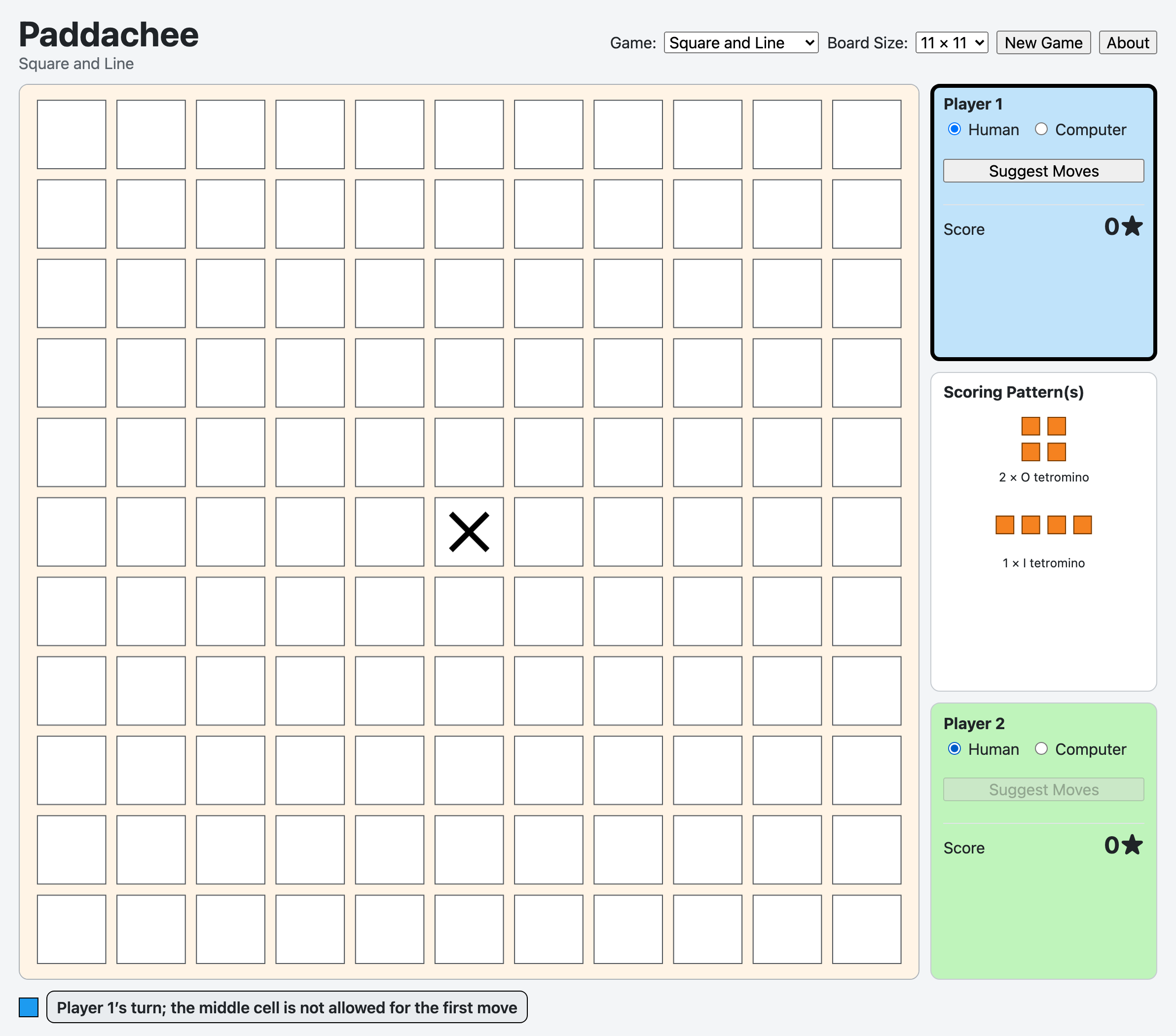
Here is the initial display for a typical Paddachee game. A more complete description of the controls is available on the app usage page.
As shown in the Scoring Pattern(s) panel, this variant awards two points for four cells in a 2×2 square and one point for four cells in a straight line. Any rotation or reflection of a scoring pattern is valid. Overlapping patterns score separately. For example, if four in a row is worth one point, a line of five is worth two points because it contains two overlapping lines of four.
There are two players, using blue and green. The current player is indicated by the dark outline around that player’s panel, by the text in the status box, and by the colored square beside the status. Either player can be human or computer-controlled, although the app does not allow two computer players at once.
Playing Example
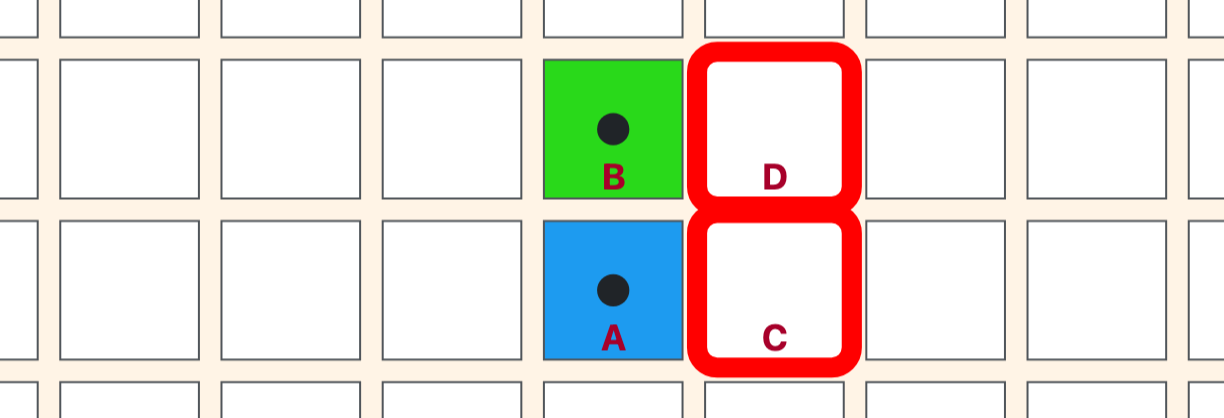
The scoring patterns for this example are the same ones shown above: a 2×2 square is worth two points, and a four-in-a-row is worth one. The × marks the middle of the board. Blue moves first, in the cell marked A and emphasized in red.
The letter labels and red emphasis are tutorial annotations. They do not normally appear while you play.

Blue’s move has a black dot in it. The dot marks the most recent move. Green moves next, in cell B.

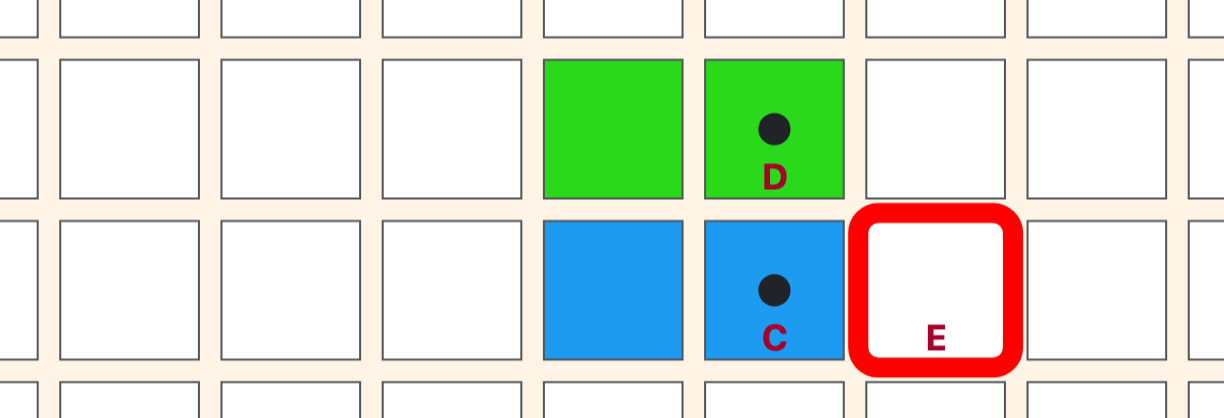
The next two moves are in cells C and D.
Blue then moves at E …
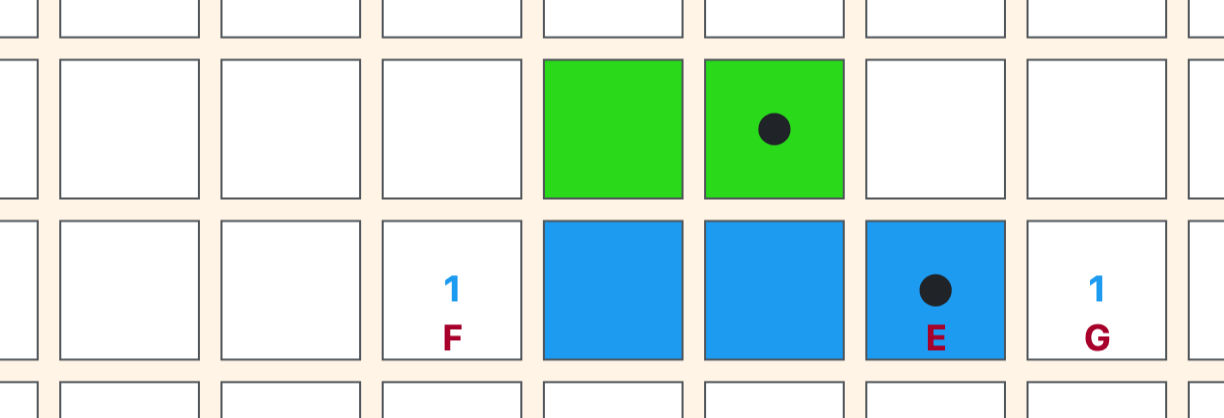
… which creates our first threats, at F and G. Threats are shown as small numbers in the threatening player’s color. Blue has not earned those points yet; she must claim F and/or G on a future turn to score them.
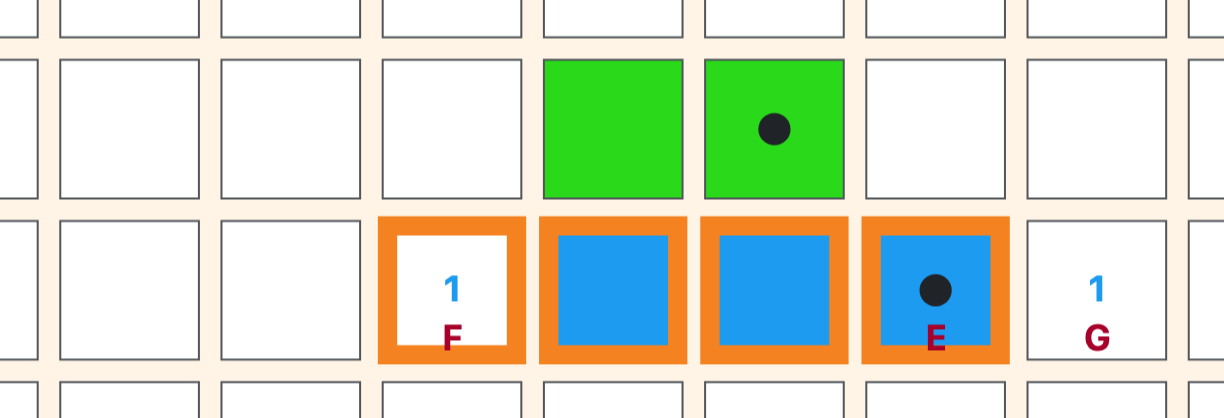
If you are new to the game, it may not be obvious what is being threatened at F and G. The app can highlight the threatened placement. In the human player panel, change Click/tap means… from Normal movement to Threat placements, then click or tap F. The app shows that blue needs just one more cell to complete a four-in-a-row. On a computer with a keyboard, control-clicking the cell is a shortcut for the same inspection.
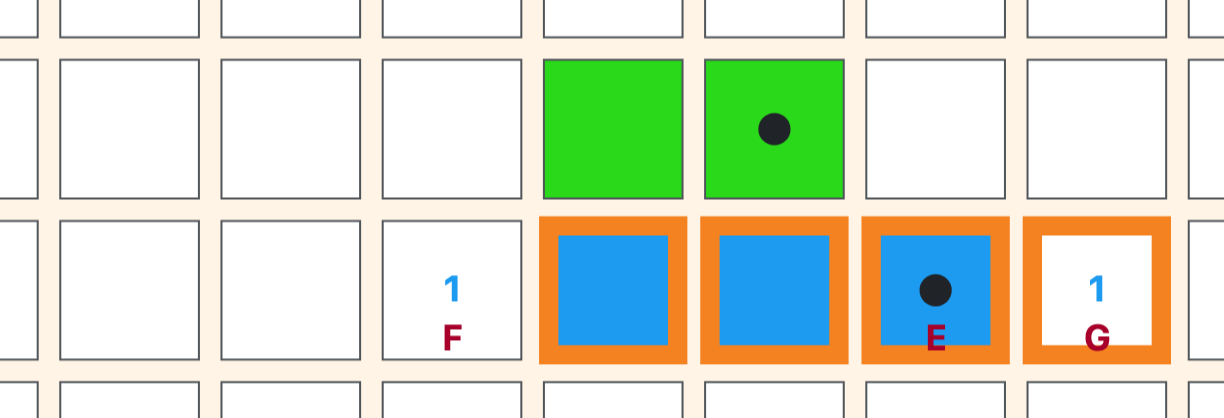
Similarly, clicking or tapping G while Threat placements is selected shows another four-in-a-row that blue has nearly completed.
Before continuing the game, return Click/tap means… to Normal movement.
Green cannot block both threats on the same turn. She chooses to block one of them by moving at G. Blue still has her threat at F and moves there.
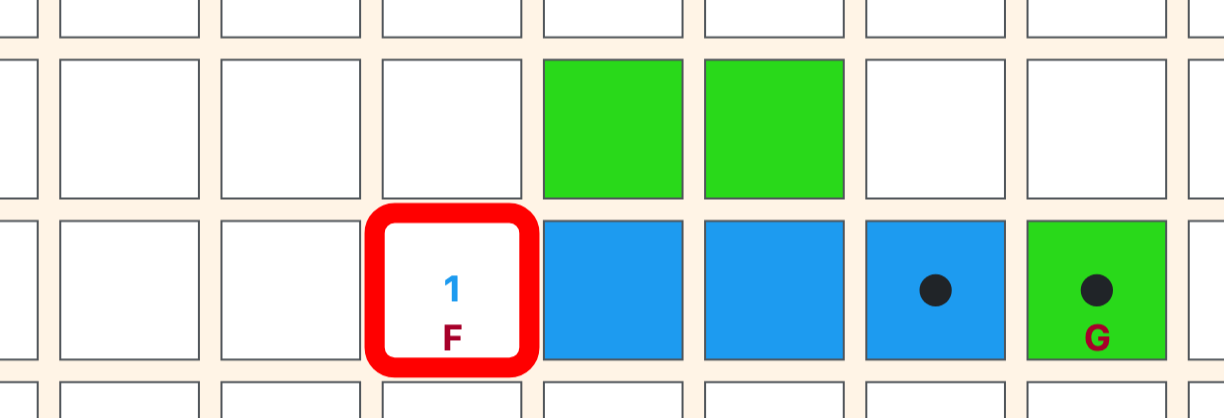
Blue gets a point for moving at F. The score is shown by a star-shaped badge in her color, with the number of points inside it, and is also added to the score in her player panel.
Blue’s move has created a continuing threat. If green allows her to take H, blue will complete another four-in-a-row, so green moves at H to put an end to it.
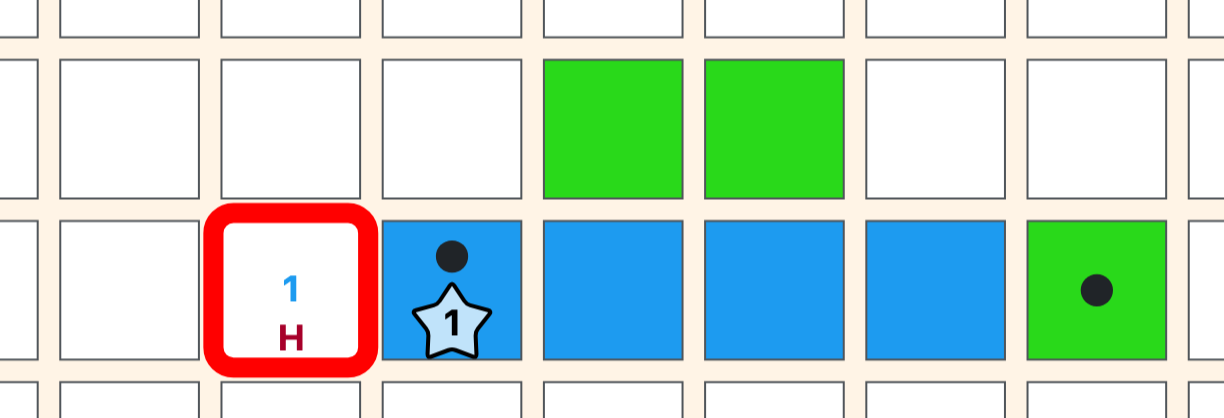
But green only thinks she has put an end to the threat. Blue has another idea and moves at I …
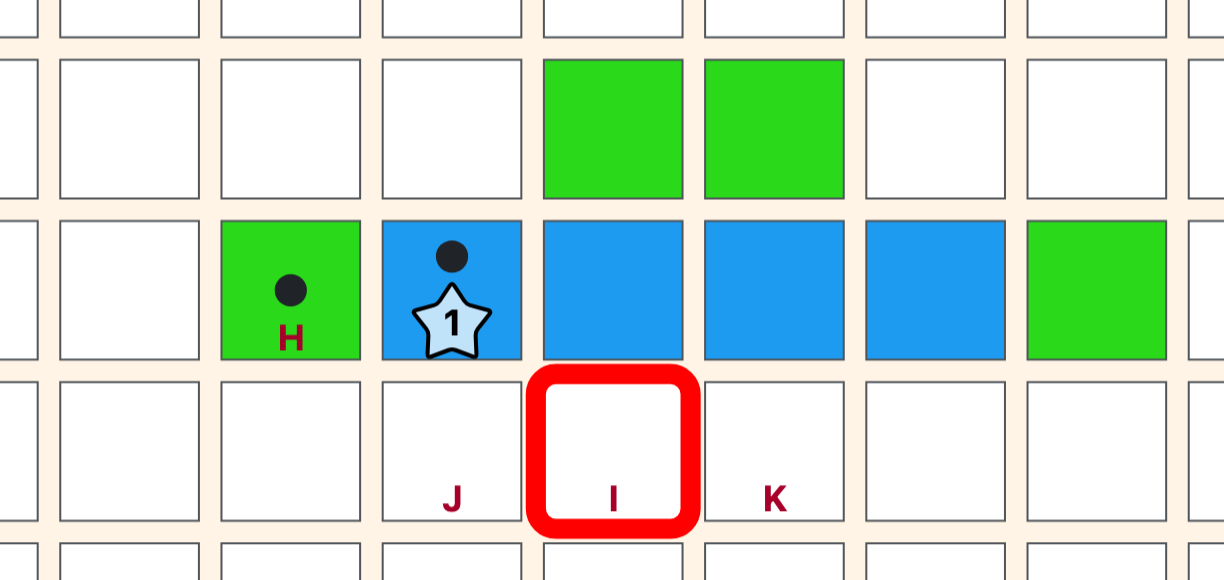
… and blue’s move creates another pair of threats, at J and K.
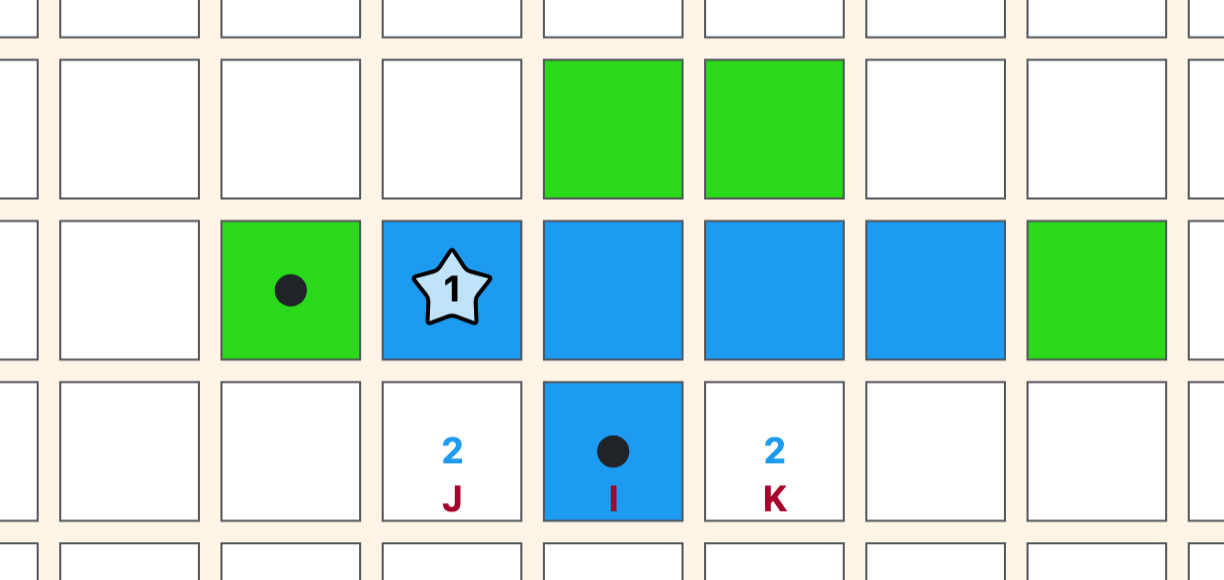
Select Threat placements again and click or tap J. This shows that blue is close to completing a 2×2 square. Remember, a 2×2 square is worth two points.
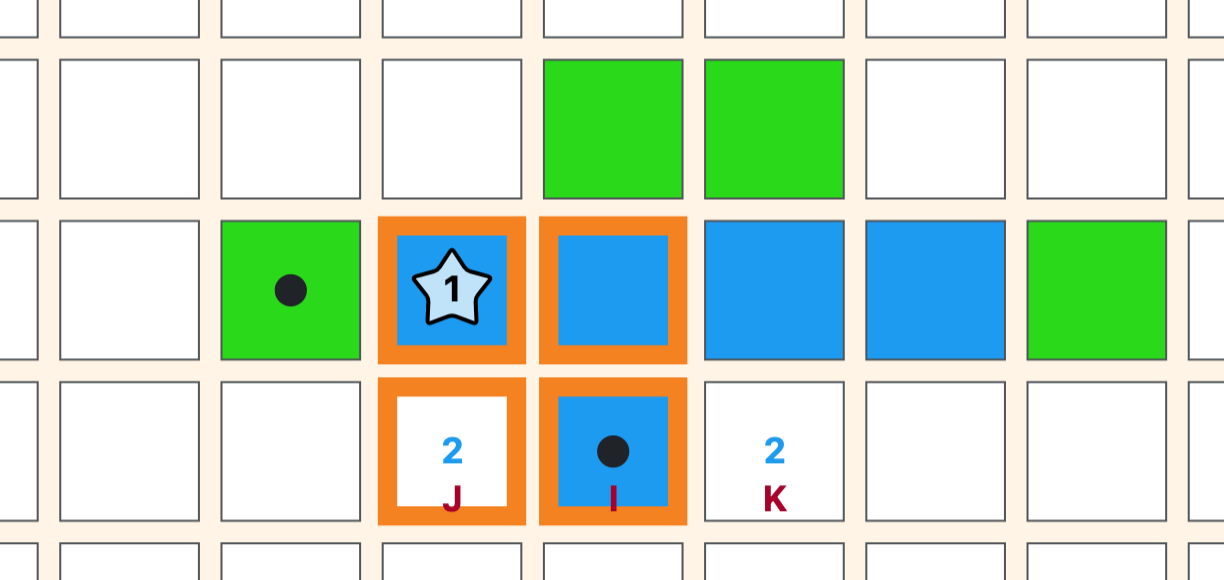
Clicking or tapping K shows another threatened 2×2 square.
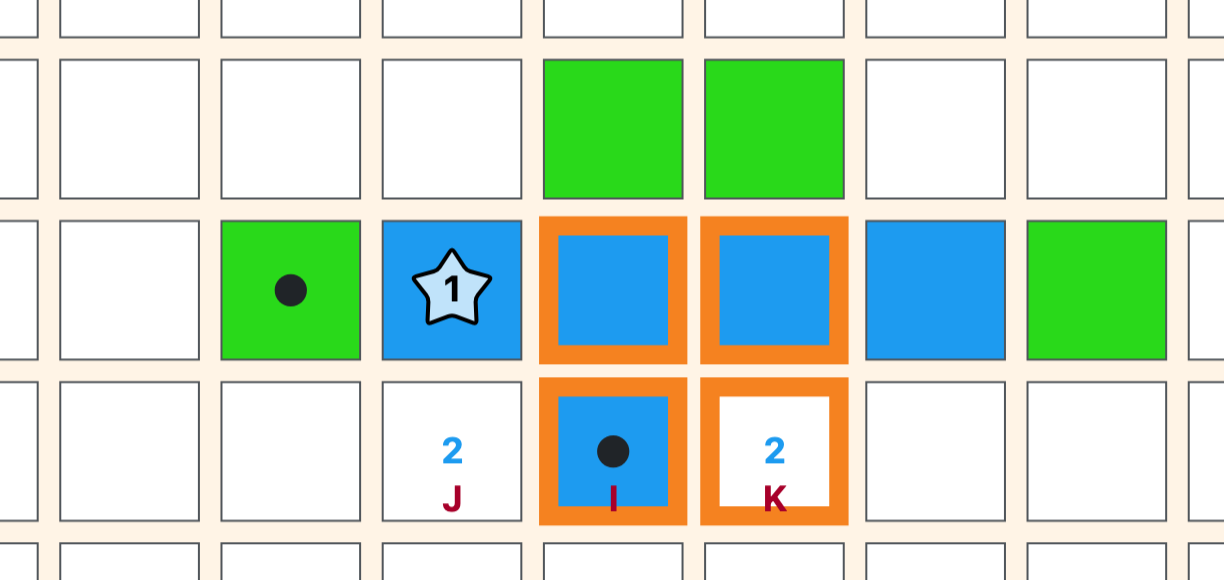
Remember to return the menu to Normal movement.
As before, green cannot block both threats on the same turn. She blocks one by moving at K, after which blue takes the two points waiting for her at J.
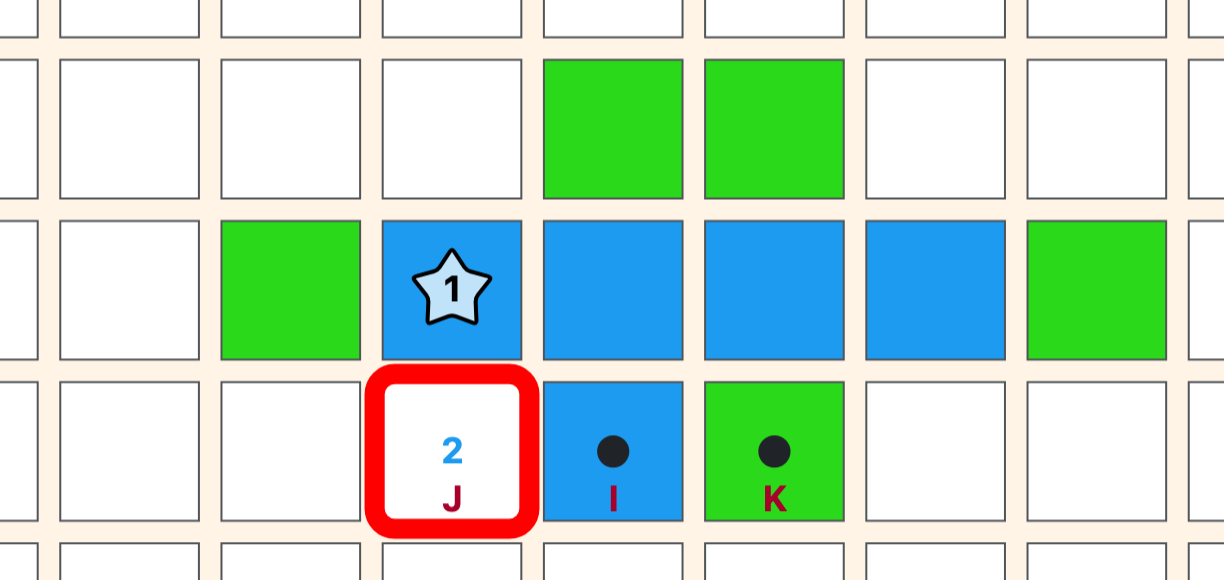
Though now trailing 3–0, green feels that threat is more or less under control. She decides to go on the offensive at L.
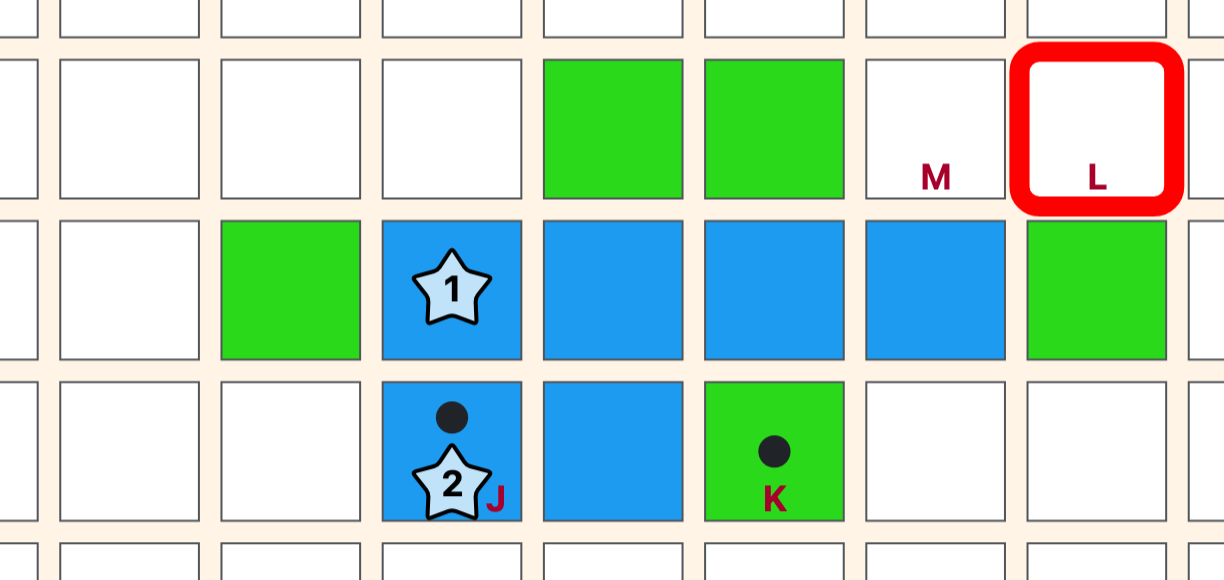
Green is now threatening a point at M.
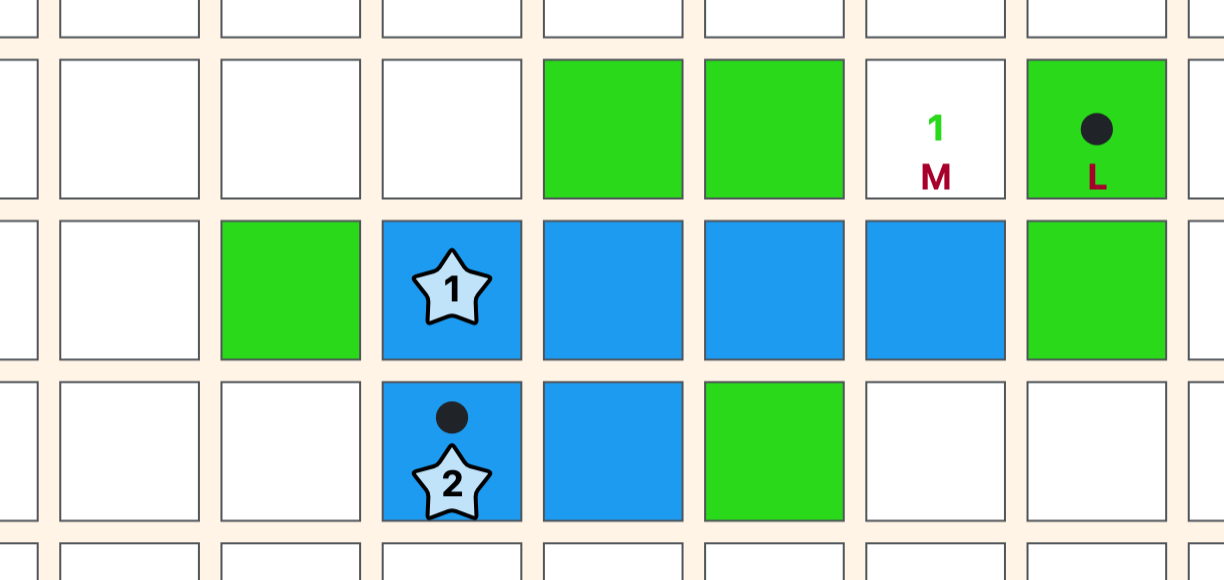
Using Threat placements at M reveals that green would be able to complete a four-in-a-row from the inside. Blue is unconcerned and continues on the offensive by moving at N.
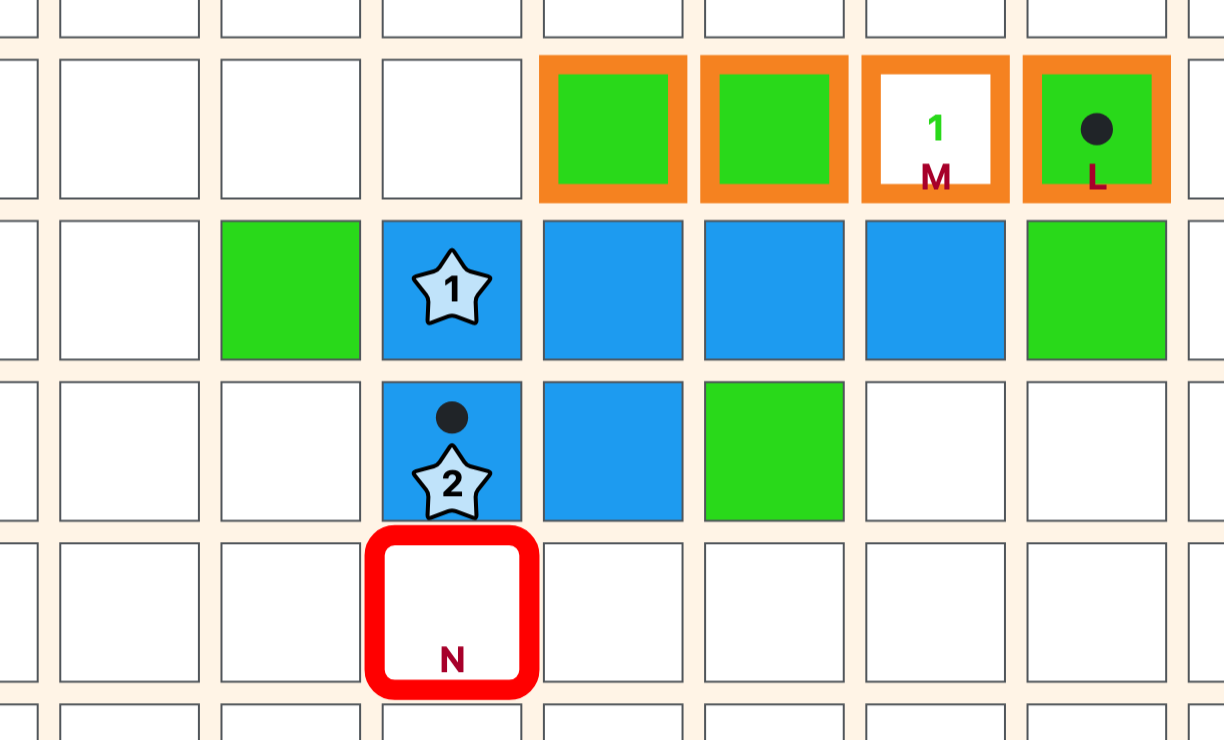
Blue’s latest move has introduced a triple threat. She could complete a four-in-a-row at O or P, or a 2×2 square at Q.
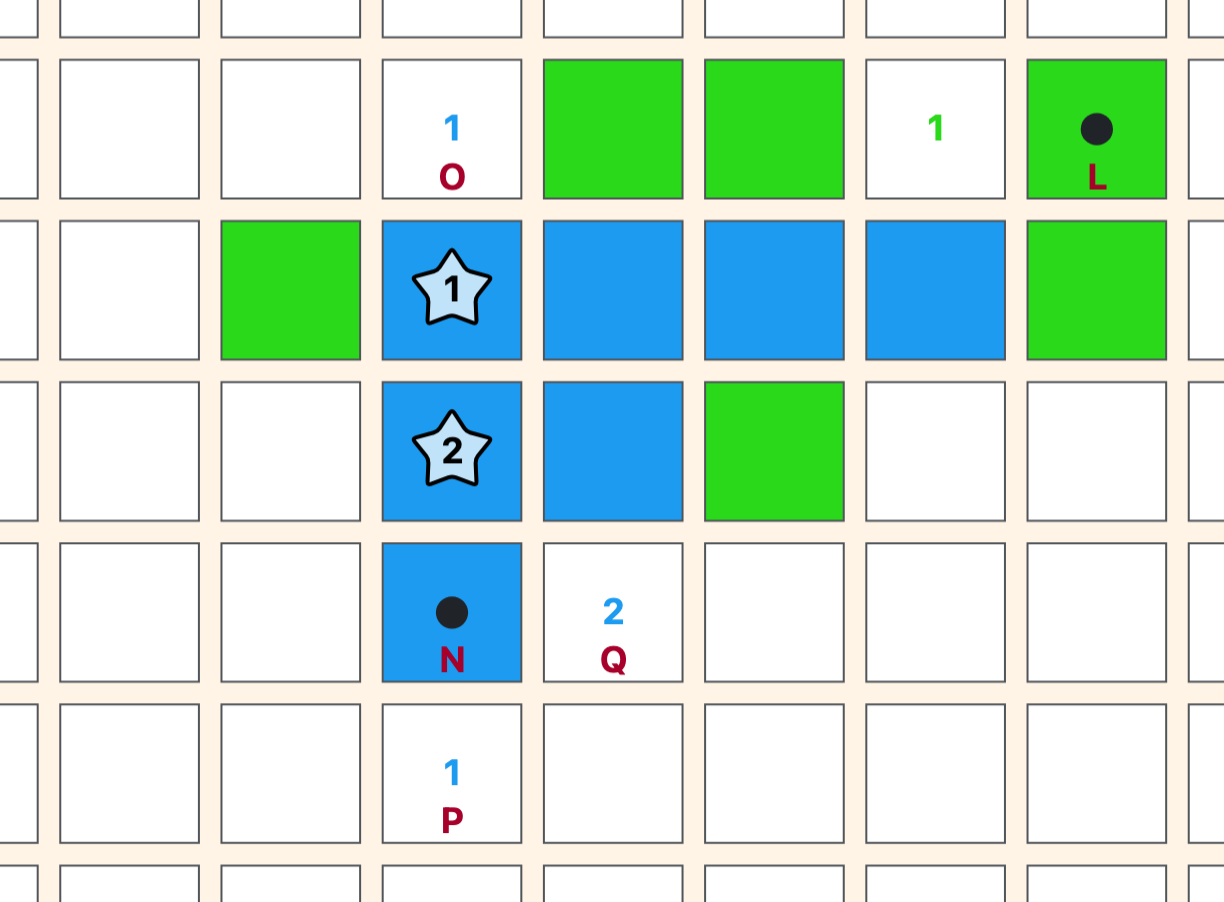
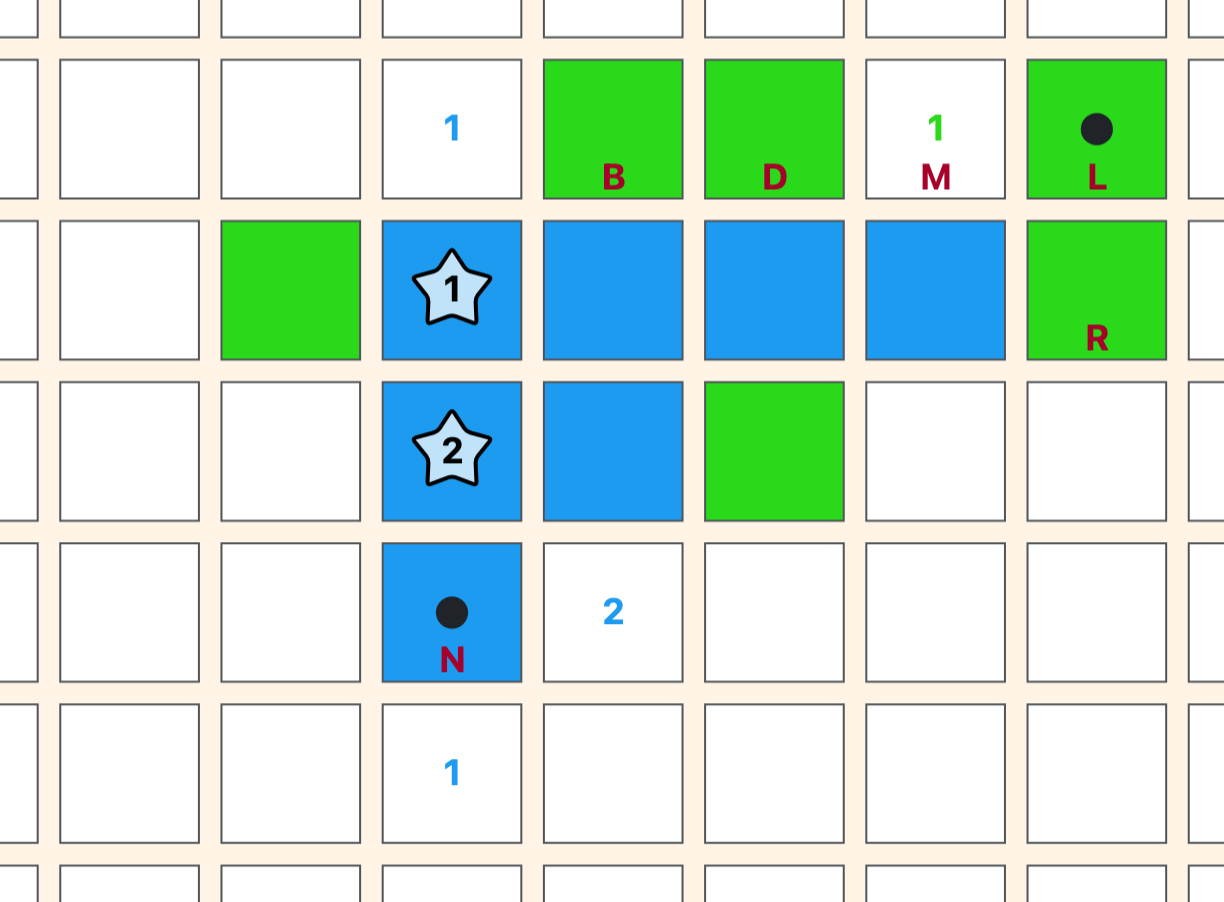
As green ponders her next turn, all is not lost. If she claims M, she gets a point and creates a couple of continuing threats—one to the left of B and another to the right of L. Further, the unblocked two-in-a-row she has at L and R could be extended on either end to threaten another pair of four-in-a-rows.
That is the end of this tutorial. The position is already tactically rich, which is a good illustration of how quickly threats and counter-threats can develop in Paddachee.