Work from constrained cells
A plum cell needs exactly one neighboring click. When it has only a few neighbors, you can often test every possibility.
Walk-through 2
In this tutorial, we’ll solve a five-move puzzle step by step. Along the way, we’ll use inspection to rule out poor moves and begin recognizing useful patterns on the board.
Follow along in a separate windowThis puzzle has more color than the one in the first walk-through. In particular, cell 22 is lime. The color wheel tells us that lime is three steps away from black.
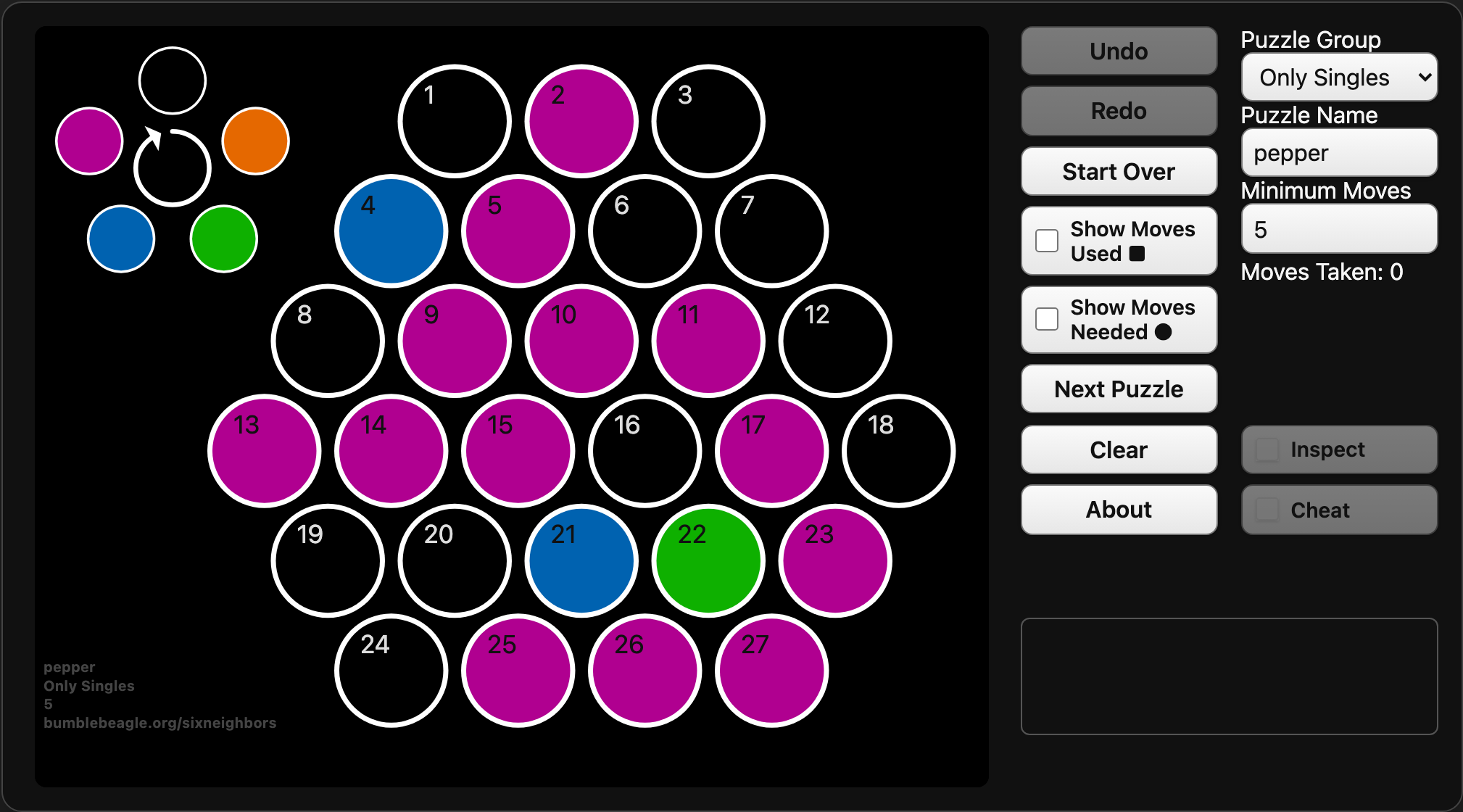
Neighbor relationships work both ways. If a cell is a neighbor of 22, then 22 is also one of that cell’s neighbors. Inspecting cell 22 therefore shows the six cells we might click to change it.
Because cell 22 is three steps from black, exactly three of those neighbors must be clicked during the solution. We’ll come back to this cell later.
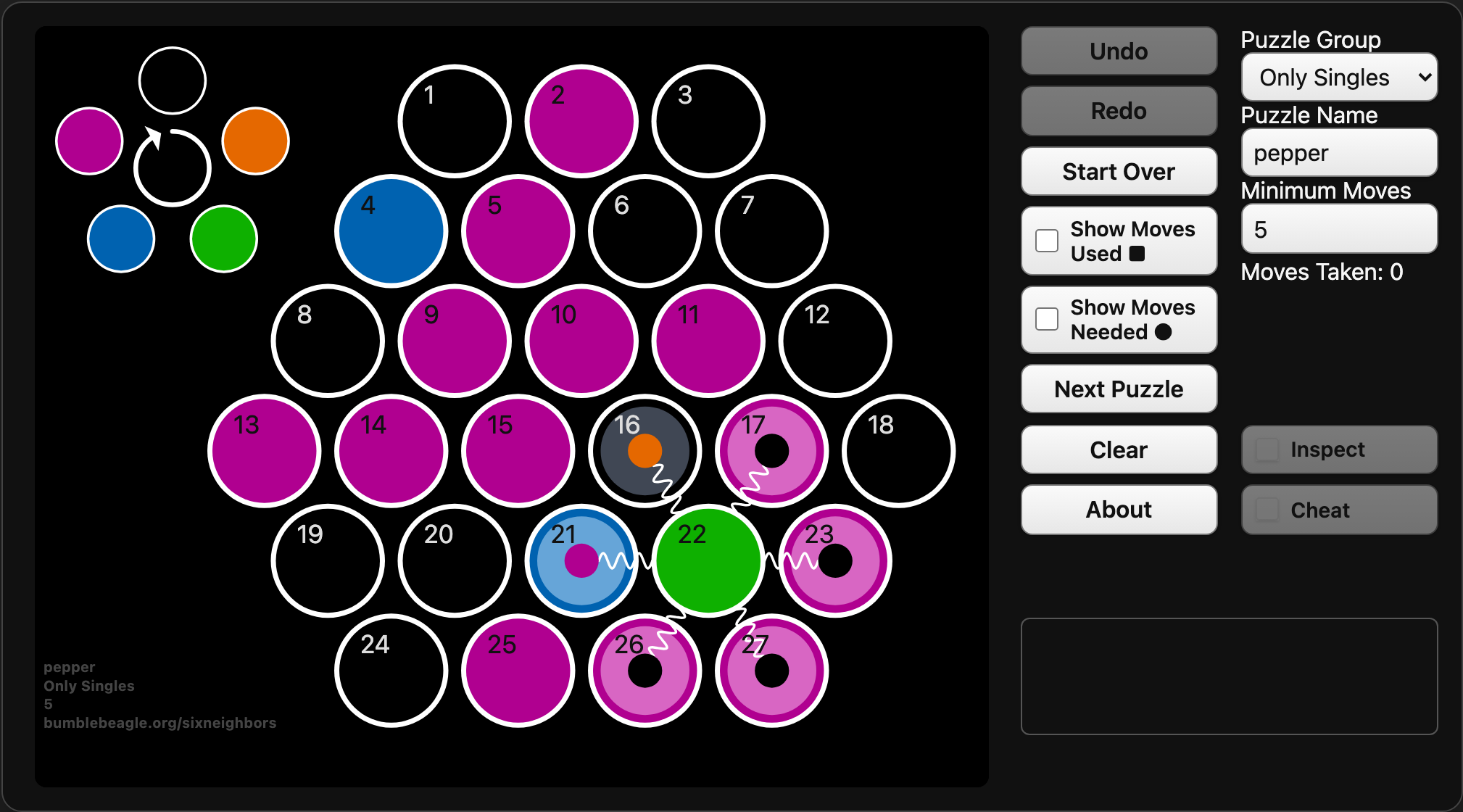
Now look at cell 2. It is plum, so it needs to advance only once to reach black. That means exactly one of its neighbors should be clicked.
Inspection shows the four possibilities: cells 1, 3, 5, and 6.
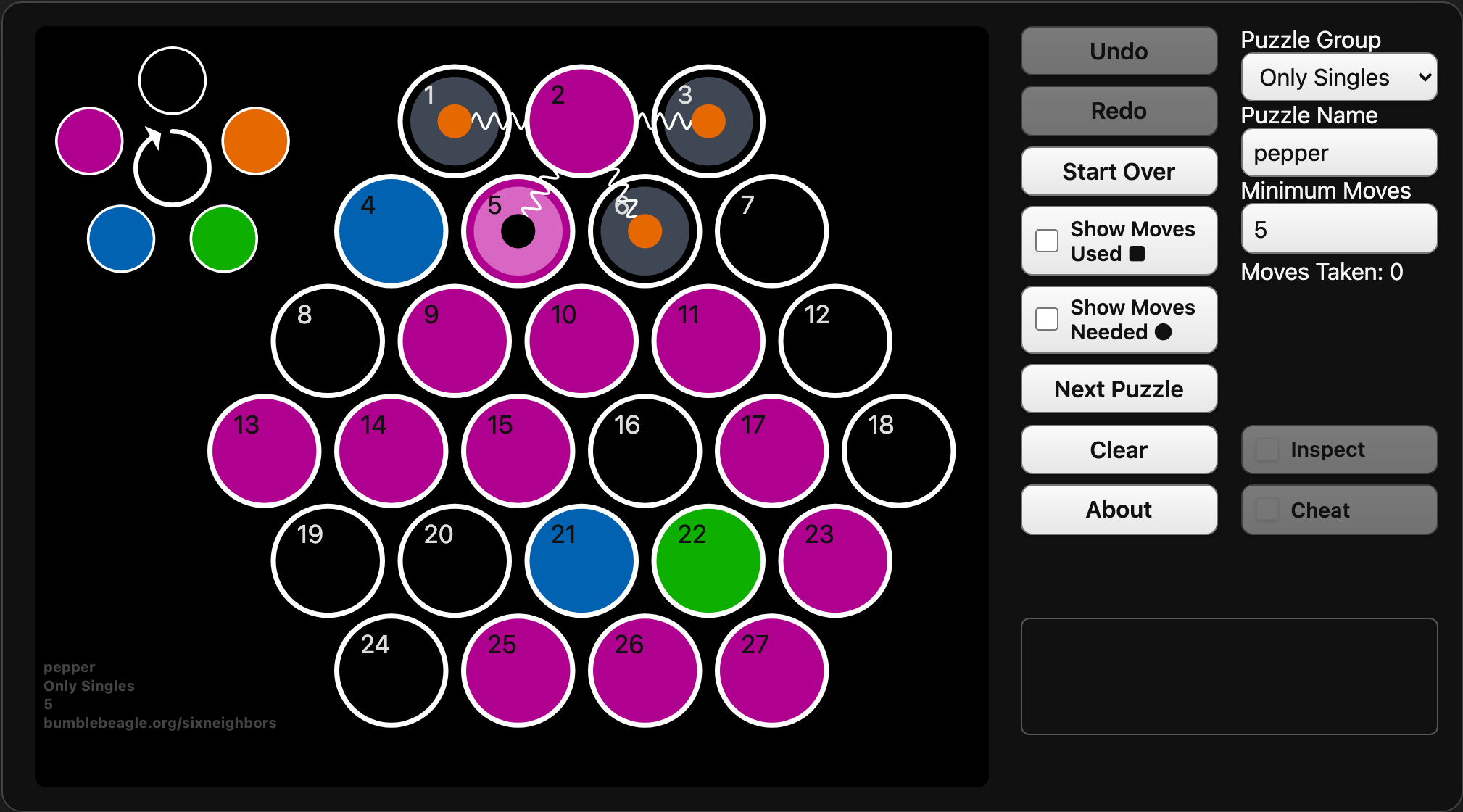
Suppose we clicked cell 3. That would clear cell 2, but it would also change the black cells 6 and 7 to tangerine.
A tangerine cell is four steps from black. Since the entire puzzle is supposed to take only five moves, creating tangerine is undoubtedly a mistake.
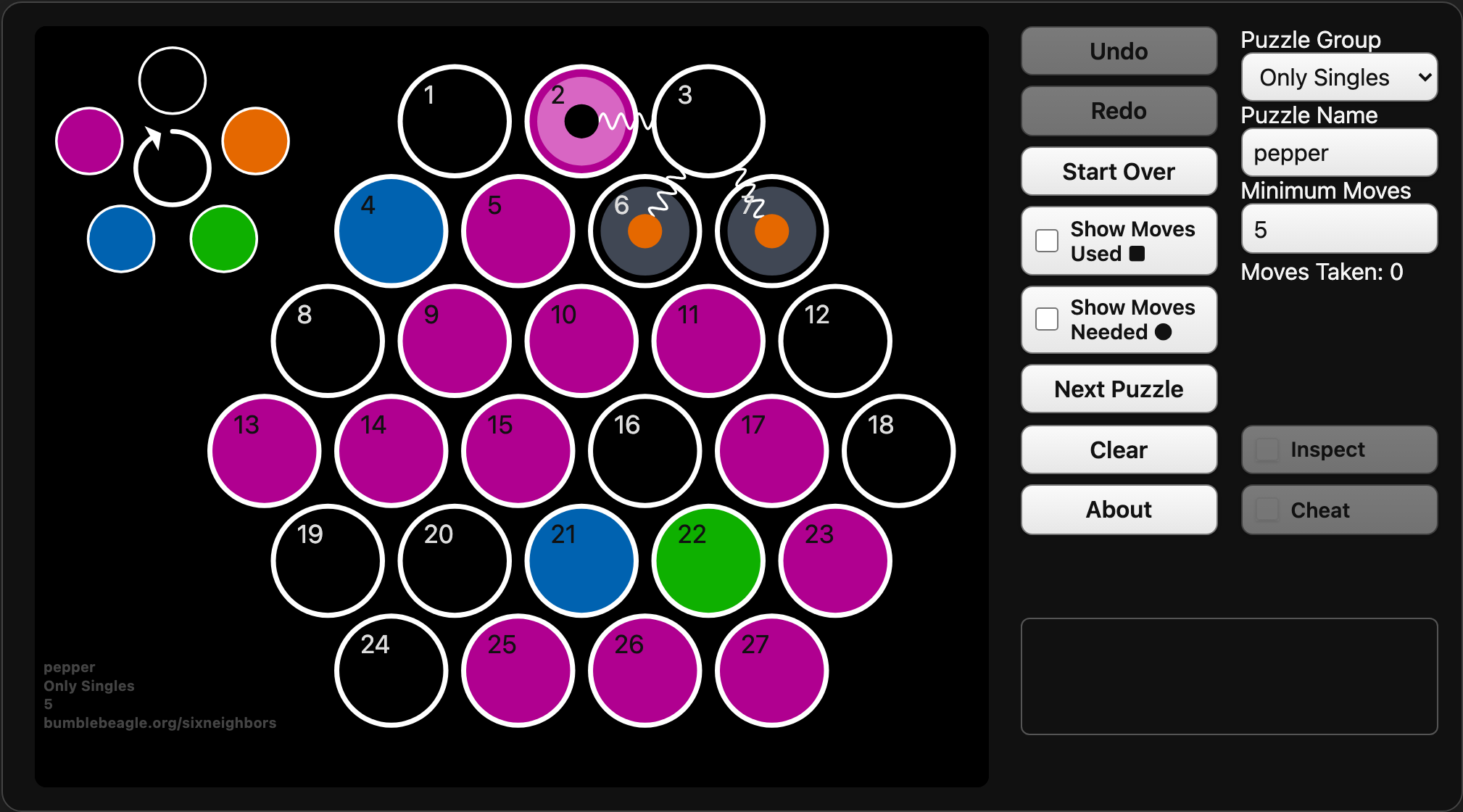
Clicking cell 6 has the same problem: it would change black cells 3 and 7 to tangerine. We can rule that out too.
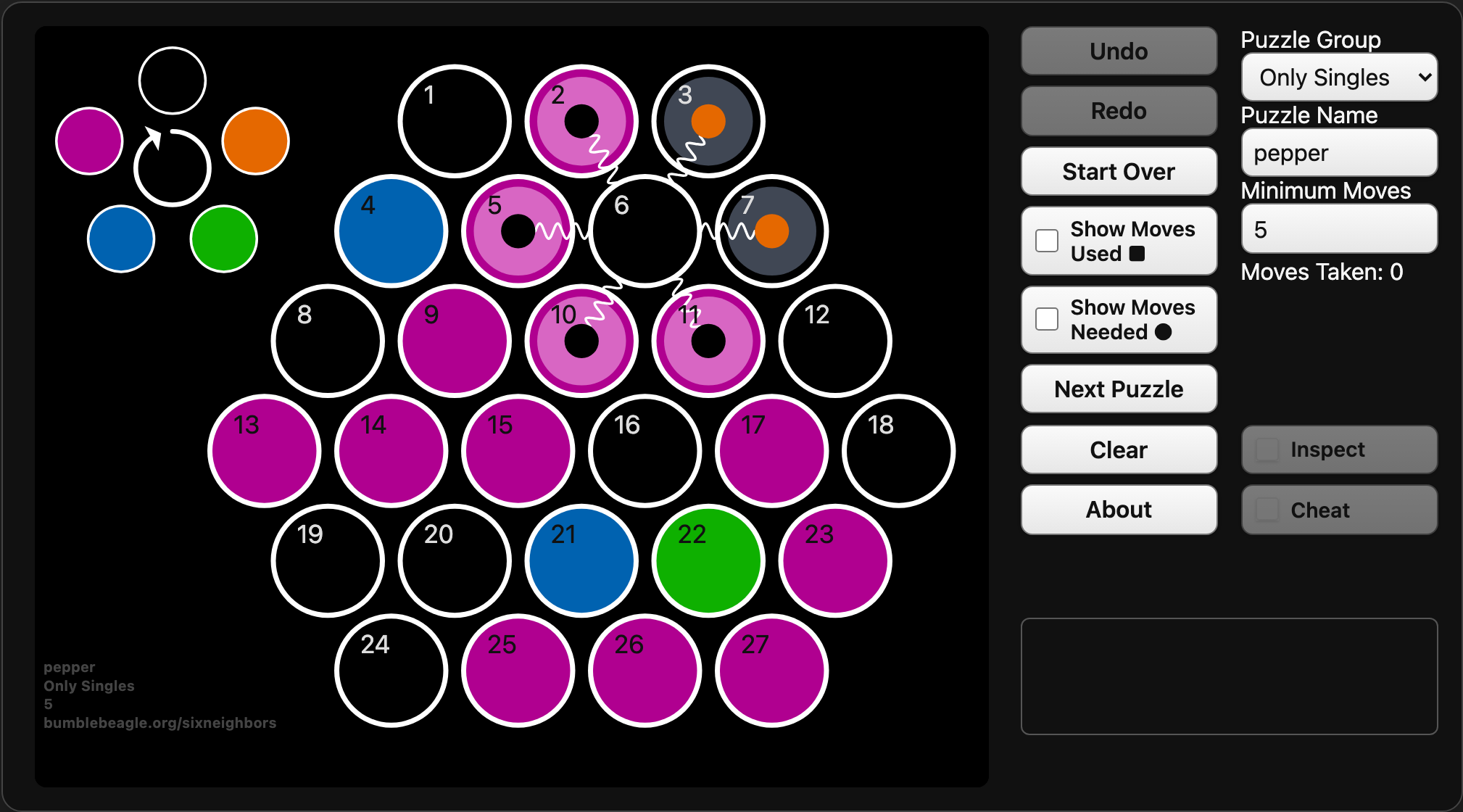
That leaves cell 1 as the only promising way to clear cell 2. Inspection confirms that clicking 1 will also clear 6, without any obvious bad side effects.
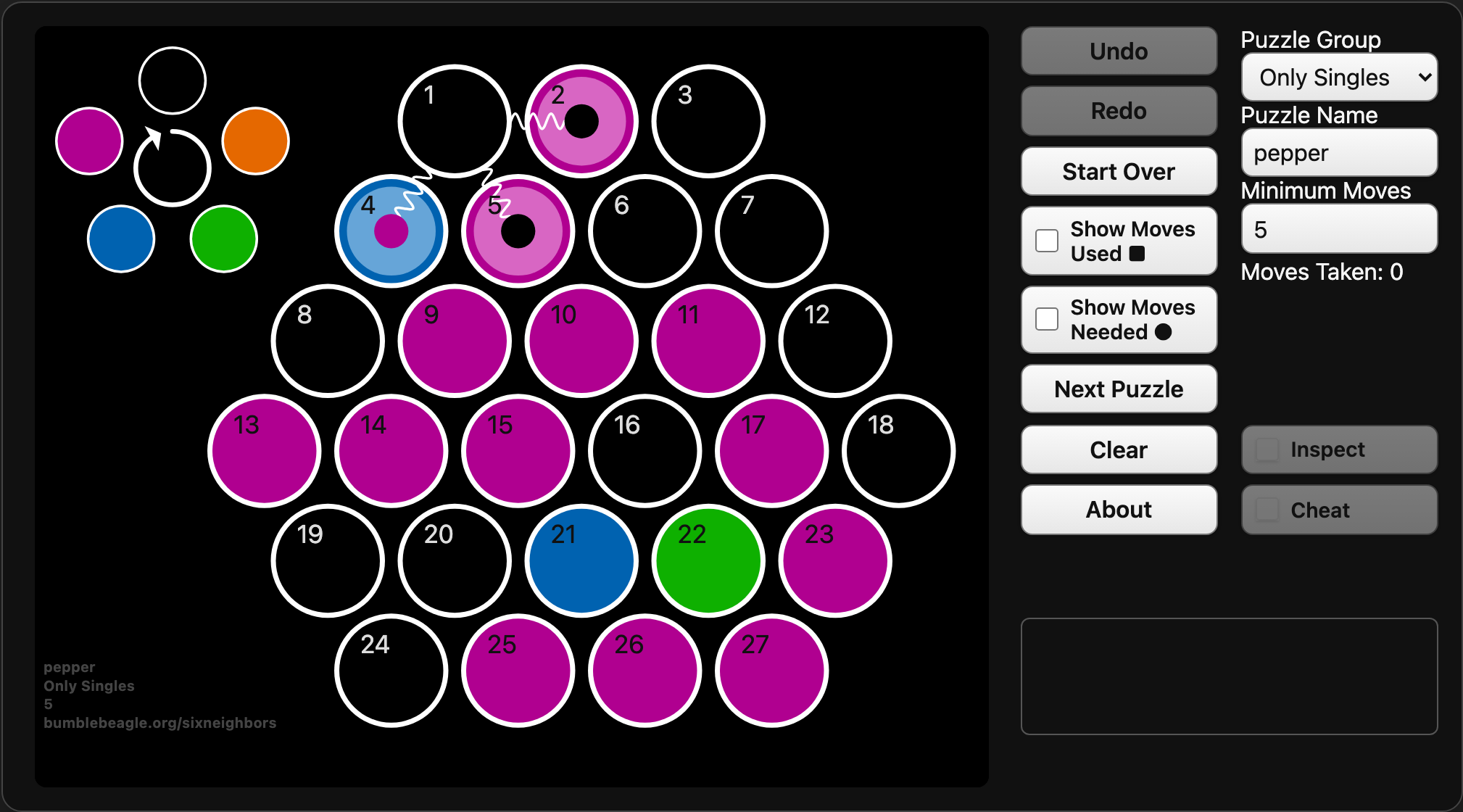
Click cell 1. Cells 2 and 6 become black, and the puzzle is already starting to look simpler.
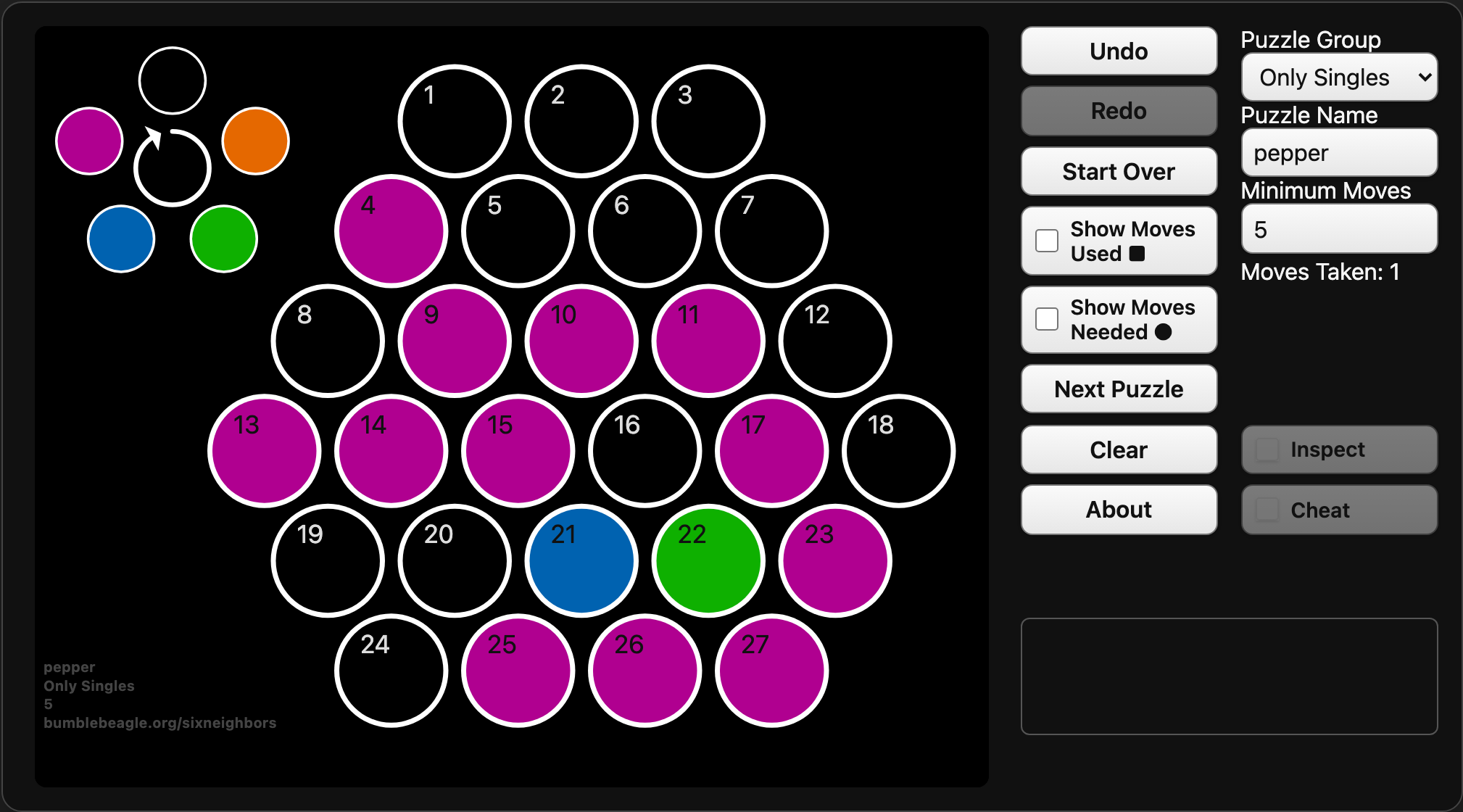
Using the same reasoning, we could determine that clicking cell 8 is the promising way to clear cell 4. But there’s also a visual clue.
Cells 4, 9, 13, and 14 form a kind of half-donut: four plum cells curving around the black center at 8. The shape suggests that a click in the donut hole might clear the entire group. Inspection confirms it.
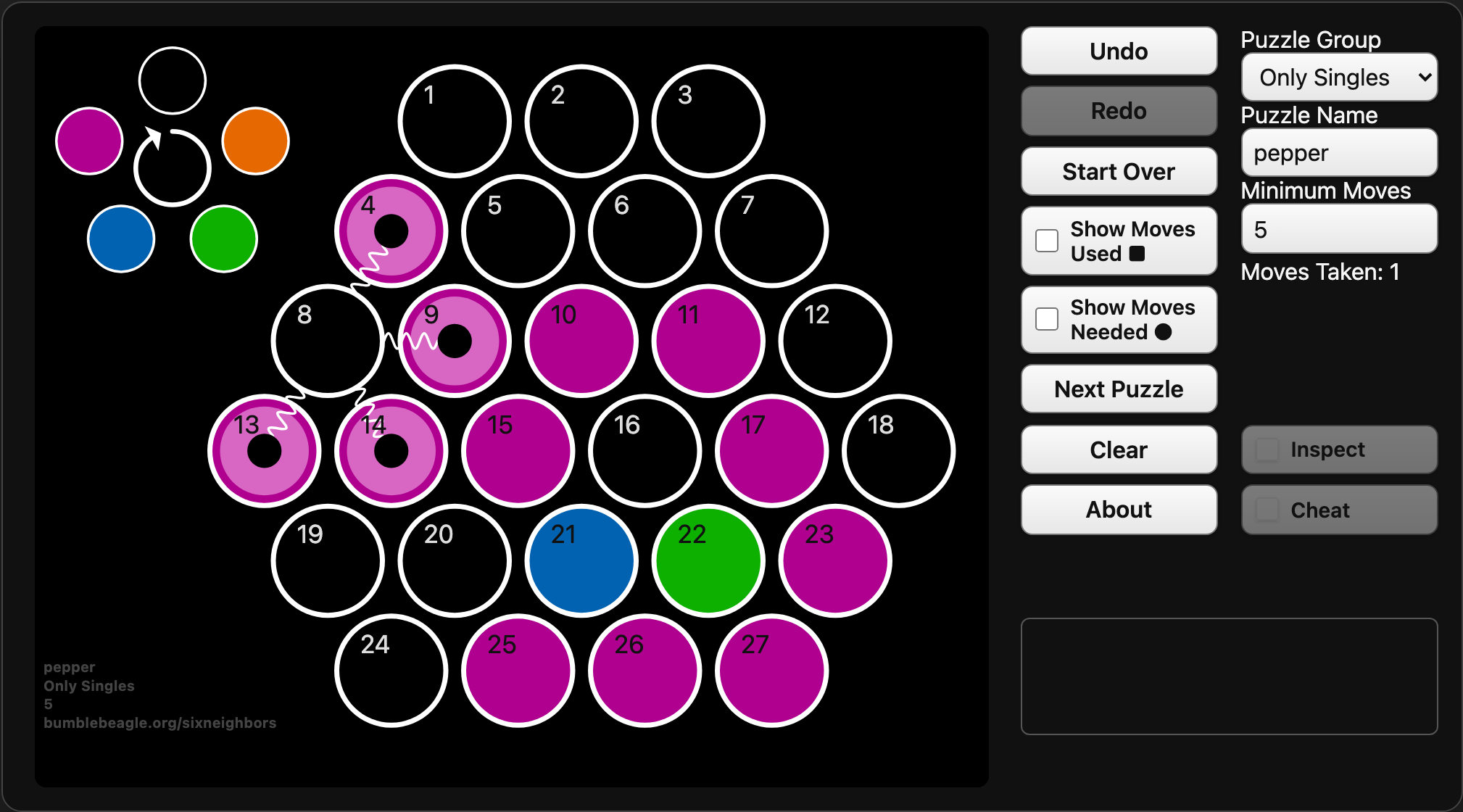
Click cell 8. The four surrounding plum cells all advance to black.
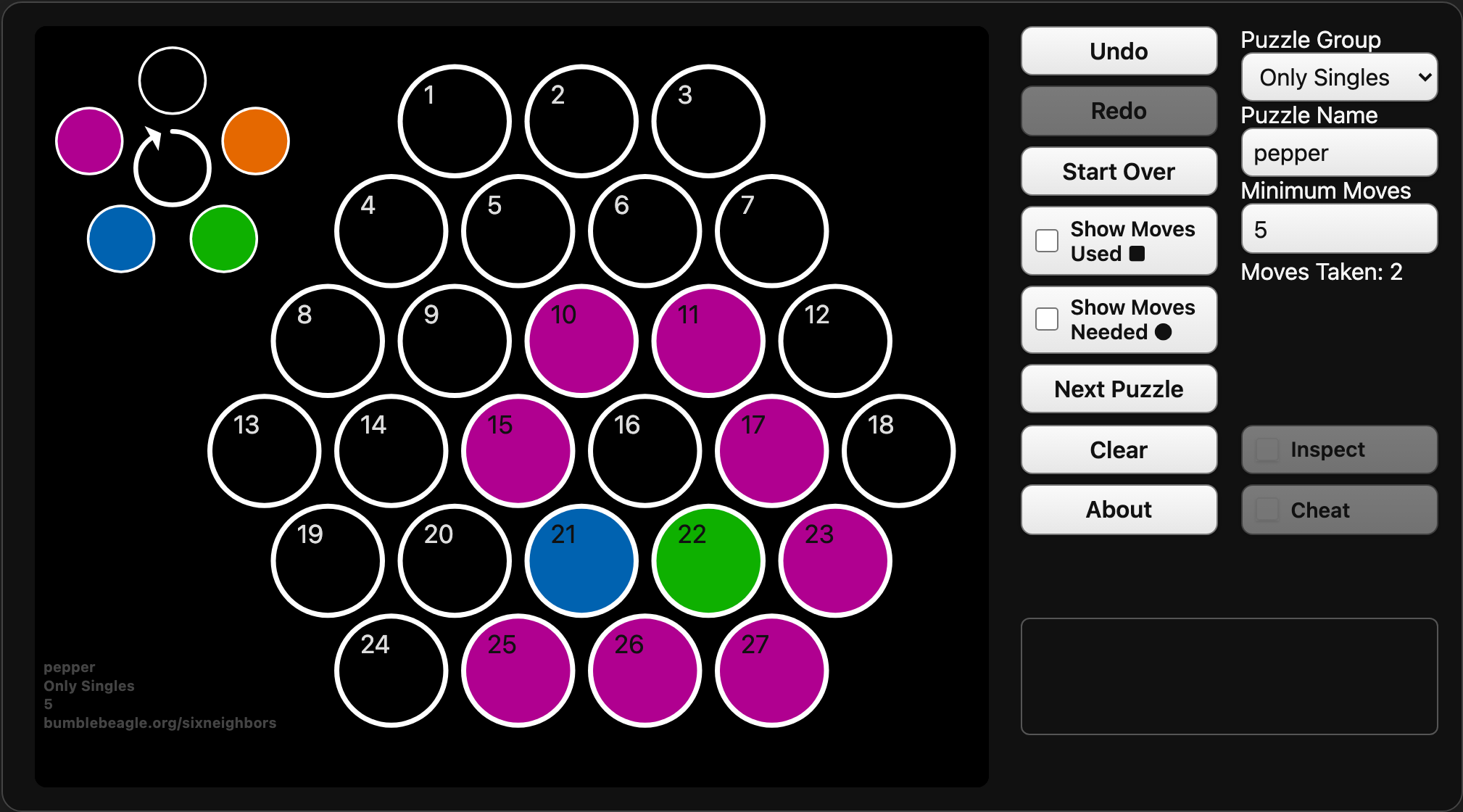
Now another donut appears, this time with its hole at cell 16. Its ring is not entirely plum, but inspection shows that clicking the center still has no apparent bad side effects.
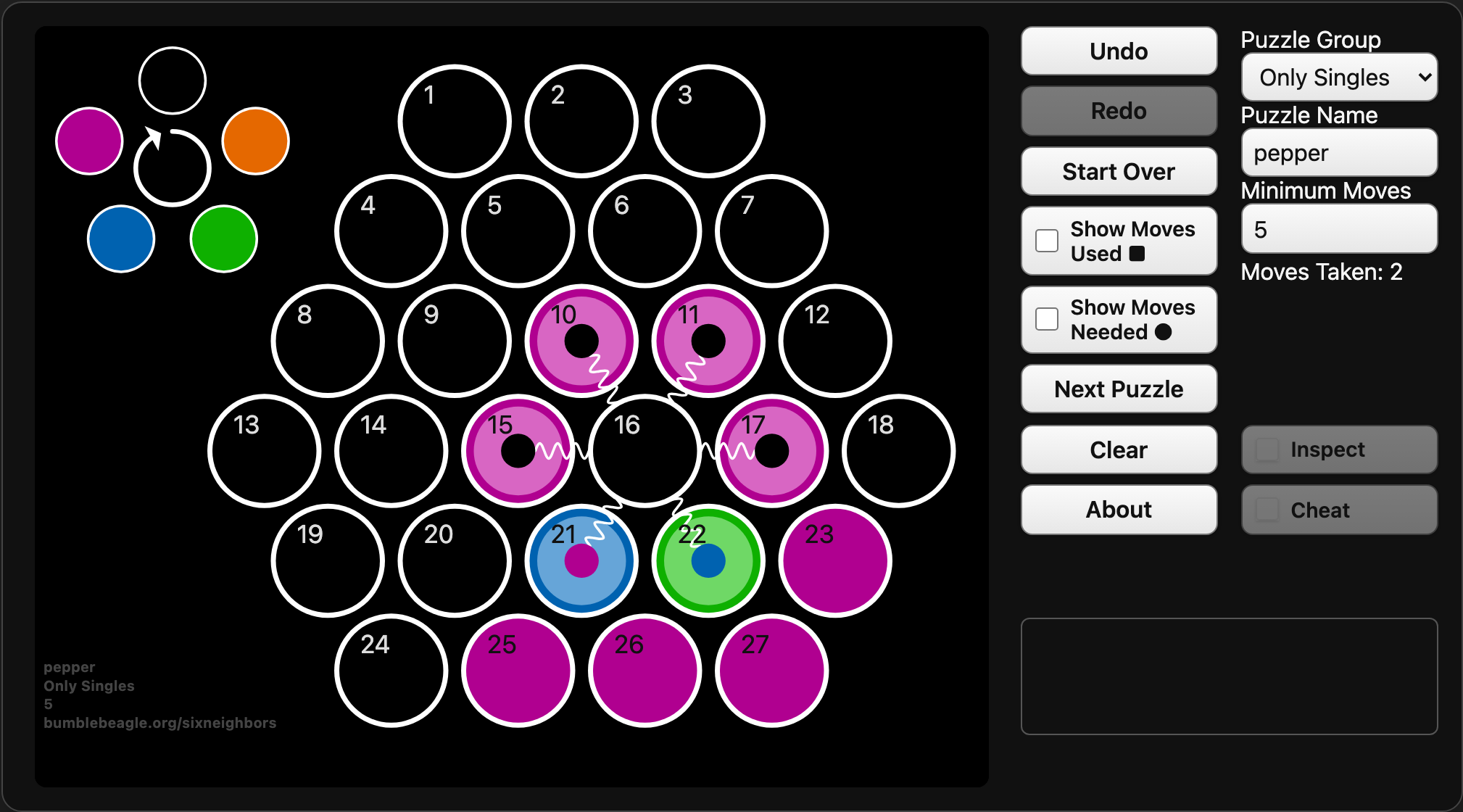
Click cell 16. We now need only two more moves, and almost every colored cell is plum.
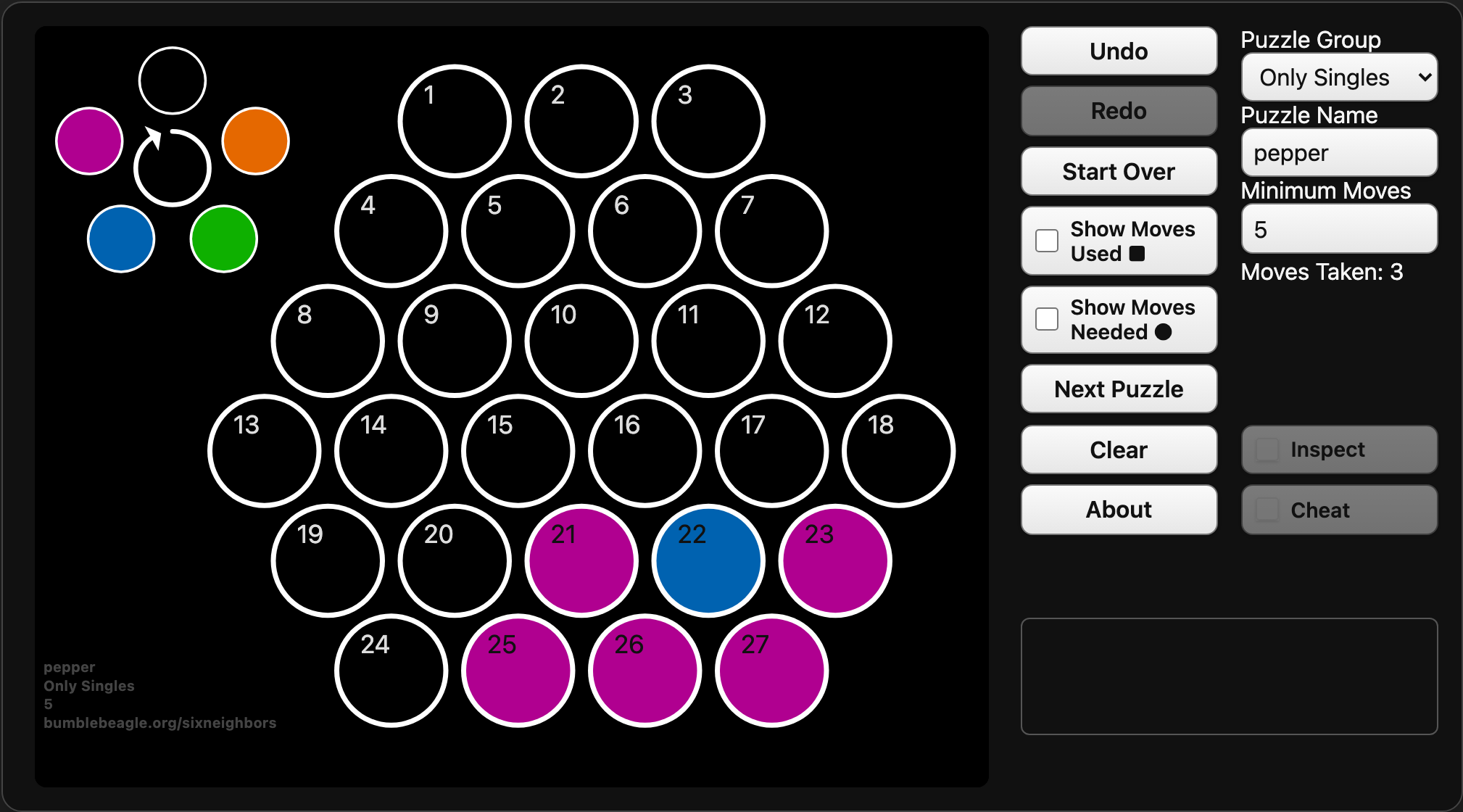
We can apply the same logic we used for cell 2 to cell 25. The only promising way to clear it is to click 26.
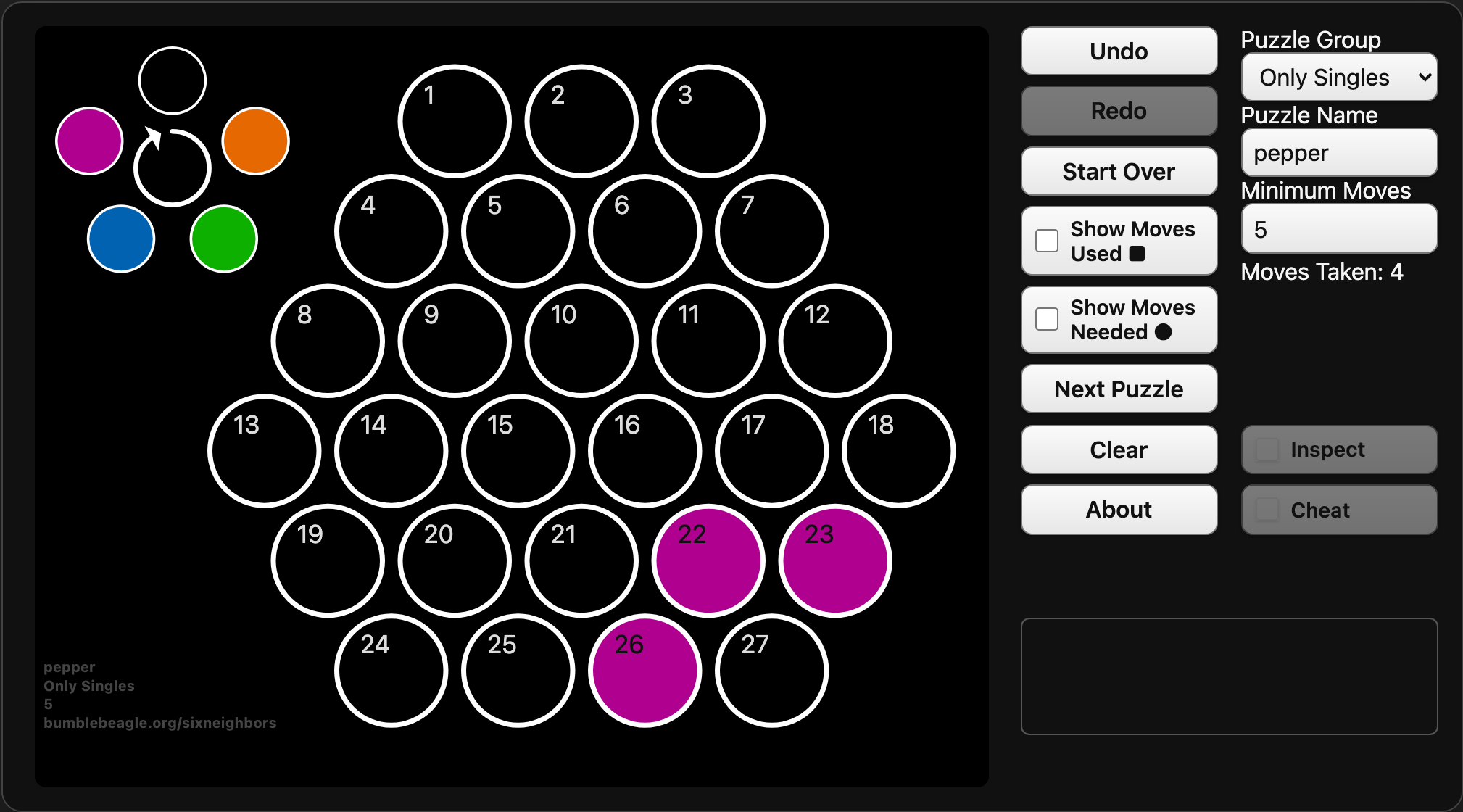
After that move, the only colored cells are the three plum cells in the corner. One final click on 27 clears all three and solves the puzzle.
What you learned
A plum cell needs exactly one neighboring click. When it has only a few neighbors, you can often test every possibility.
Turning a black cell into tangerine creates four steps of future work. In a short puzzle, that is usually a warning sign.
Rings, half-rings, and corner groups can reveal a move before you analyze every affected cell individually.
Walk-through complete
Try another five-move puzzle and see which of these ideas you can spot.